Middle East Tensions: What It Means for Global Ocean Freight and Your Supply Chain
Recent instability in the Middle East is once again drawing global attention — and for importers and exporters, the real concern is not just politics.
It’s logistics.
For companies moving cargo between Asia, Europe, and North America, developments around key maritime corridors such as the Red Sea, the Suez Canal, and the Strait of Hormuz can have immediate and far-reaching consequences.
Here is what importers need to understand.
1. Route Disruptions and Vessel Diversions
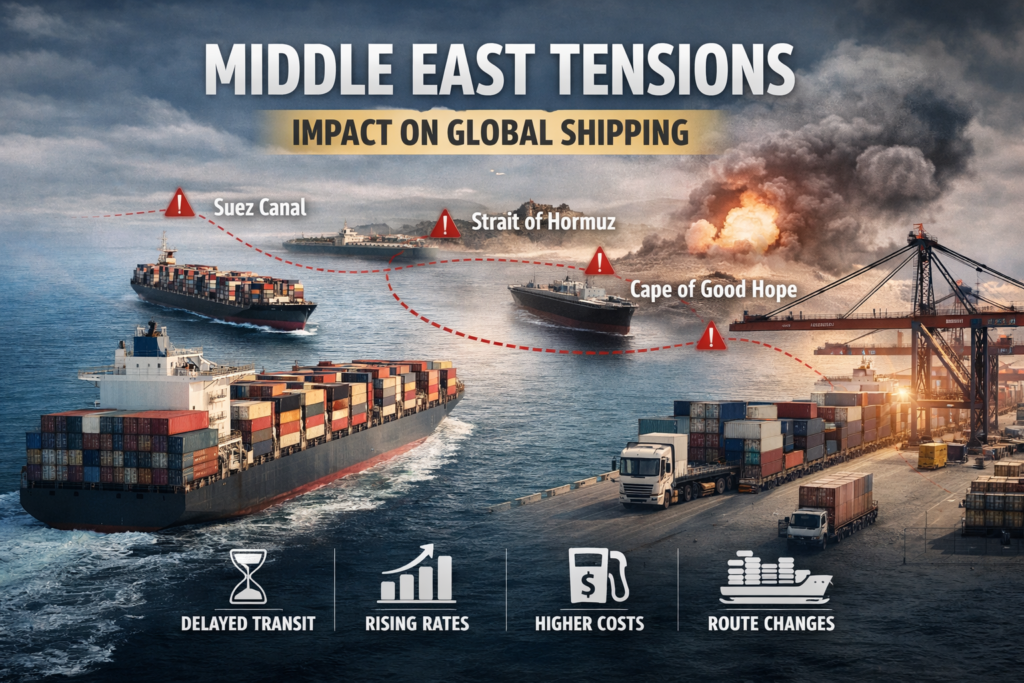
The Red Sea–Suez Canal corridor handles a significant portion of Asia–Europe and Asia–US East Coast trade.
When security risks increase:
- Carriers may suspend Red Sea transits
- Vessels reroute via the Cape of Good Hope
- Transit time increases by 10–15 days
- Equipment cycle times extend globally
This doesn’t just impact Europe — it affects vessel positioning worldwide.
2. Freight Rate Volatility
Geopolitical instability often triggers:
- Emergency rate adjustments
- War Risk Surcharges
- Reduced available capacity
- Shortened rate validity (sometimes less than 7 days)
Even trade lanes not directly passing through the conflict zone can experience rate increases due to global capacity tightening.
3. Fuel and Operating Cost Pressure
The Strait of Hormuz is a strategic energy chokepoint. Any escalation in that region may push oil prices higher, which in turn impacts:
- Bunker Adjustment Factors (BAF)
- Carrier operating costs
- Overall ocean freight pricing
These cost increases tend to ripple across all major trade lanes.
4. Schedule Reliability Challenges
When vessels are diverted:
- Global schedules become misaligned
- Port congestion can intensify
- Equipment shortages may occur in key export hubs
- Arrival predictability declines
For time-sensitive cargo, this creates real risk.
5. What This Means for Importers
For US and European importers sourcing from Asia, this environment requires:
- Flexible routing strategies
- Proactive booking planning
- Clear visibility on transit times
- Up-to-date risk assessment
- Strong communication with logistics partners
Supply chains today are interconnected. A regional disruption can quickly become a global operational issue.
How LINKWAY FREIGHT Supports You in Uncertain Times
At LINKWAY FREIGHT, we closely monitor geopolitical developments and carrier network adjustments to help our clients:
- Evaluate alternative routing options
- Secure space before capacity tightens
- Forecast transit time changes
- Manage cost exposure proactively
- Maintain supply chain continuity
In volatile markets, information and timing make the difference.
Let’s Build a More Resilient Shipping Plan
If your cargo moves between Asia and the US or Europe and you’re concerned about potential disruptions, our team is ready to review your current routing strategy and provide practical solutions.
📩 Contact LINKWAY FREIGHT today for a customized freight risk assessment and updated market insight.
Because in logistics, preparation is not optional — it’s competitive advantage.