U.S. merchants: stocked up, but almost sold out
Recently, consumers across the United States in response to the impending tariffs shockwave began to stock up, according to the Wall Street Journal reported, from college students, full-time mothers to business executives …… The public has set off a ‘rainy day’ type of consumer tide.
However, many experts believe that the tariffs under the impact of the market situation may become worse.
According to Business Insider, nine supply chain researchers, shipping industry insiders and logistics experts interviewed agreed that U.S. consumers will face soaring commodity prices and empty shelves in the coming weeks, and some categories may even be out of stock early. Some of the experts said that if the situation continues until the end of the year, the U.S. domestic unemployment rate may rise, global market turbulence and geopolitical tensions may increase.
Business Insider spoke with nine supply chain researchers, shipping industry insiders, and logistics specialists about the timeline for when consumers might expect to see the most significant effects of Trump’s aggressive trade policy, should he maintain his current strategy.
They agreed that, in the coming weeks, Americans can expect major disruptions to the prices and availability of goods — store shelves may be emptier, prices will rise, and some products will run out sooner than others.And if things continue on the current trajectory, four of them said, by the end of the year, those effects could be compounded, leading to higher domestic unemployment rates, global market instability, and increased geopolitical tensions.
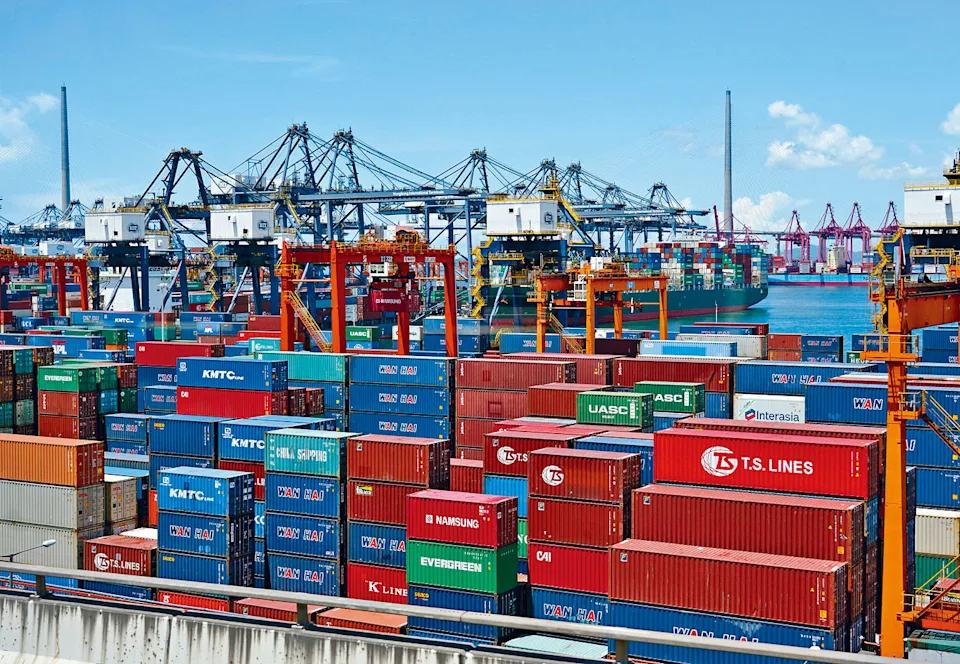
During the first week of April, following Trump’s initial April 2 tariff announcement, ocean freight container bookings saw a sharp global decline of nearly 50 percent, according to data from the digital logistics company, Vizion. Specifically, imports into the US fell 64 percent compared to the previous week, including imports from China to the US, which dropped 36 percent. Exports out of the US also dropped 30 percent, according to Vizion data.
“This is a big deal” Bob Ferrari, a supply chain executive and managing director of the Ferrari Consulting and Research Group, “It has a lot of ramifications because it’s something that the system is not equipped to deal with, and businesses are not equipped to deal with. It has a lot of far-reaching implications.”
Before Trump took office, let alone announced or implemented his tariffs plan, many major companies brought in extra inventory of products to the US in an attempt to mitigate the impact of potential tariffs, multiple supply chain experts told Business Insider. Trump implemented tariffs on countries including Mexico, Canada, and China during his first term and made tariffs a central part of his reelection campaign.
But that buffer will run out — and soon.
With the tariffs against China currently at 145%, many companies have been forced to cancel their shipments of new stock and are in a holding pattern trying to wait out Trump’s 90-day tariff pause to see what changes come next before placing big orders, Chris Tang, a University of California, Los Angeles professor who’s an expert in global supply chain management and the impact of regulatory policies, told Business Insider.
“Right now, they’re canceling orders, so the inventory will be running low, ” Tang said of businesses. “And once they sell off this inventory, then it’s either higher prices or no products.”
Ryan Petersen, the founder and CEO of Flexport, told Business Insider that if Trump makes a deal to lower the tariffs in time to bring back shipping bookings before inventory completely runs out, there will be minimal impact on consumers.
“But if there’s no deal, then yes, there will be big shortages,” Petersen said. “Probably worse than anything we’ve seen in our lifetimes.”
If the shortages start, further price hikes would be close behind, Ferrari said. Low-margin products that companies don’t make a lot of money from — like toys, apparel, holiday items, and home goods — could see shortages and price hikes sooner than others, Ferrari said.
The exact date when Americans could start seeing the effects of those product shortages depends on how much pre-inventory companies have loaded up, Ferrari said, but added that consumers could see some price hikes as early as May or June.
Appliances and electronics could see the next round of price hikes and possible shortages starting in July or August, Ferrari said.
Higher prices could then decrease consumer buying habits through major spending seasons, exacerbating the negative effects on the economy, Nick Vyas, the founding director of USC Marshall’s Randall R. Kendrick Global Supply Chain Institute, told Business Insider.
If consumers choose not to go out and spend money due to increased prices, demand decreases, Vyas said. Then, when all the backlogged supply that had been deferred and delayed in hopes that the trade environment would stabilize hits the market, there’ll be no one interested in buying it.
“All of a sudden, now you have an imbalance between supply and demand,” Vyas said.