
Shipping from Korea to the USA
Fast Transit, KORUS FTA Compliance, and Door-to-Door Solutions
Accelerate Your Supply Chain from Korea to the US. From the bustling ports of Busan to the tech hubs of Seoul, we specialize in moving Korean exports. We handle high-value electronics, automotive parts, and K-Beauty products with precision. Leverage our expertise in the KORUS FTA to reduce duties and ensure your cargo arrives safely.
Explore Shipping Options.
HASSLE-FREE LOGISTICS
South Korea to USA Door to Door Shipping Solutions
South Korea to USA door-to-door shipping offers a streamlined bridge for the world’s leading exporters of technology and consumer goods.
This service provides full visibility from pickup in Gyeonggi-do, Incheon, or Ulsan directly to your customer’s door in the US. Whether you are shipping sensitive lithium batteries requiring DG certification or bulk cosmetics, our DDP and DDU solutions ensure compliance. We integrate Korean inland logistics with trans-Pacific ocean freight, handling all US Customs (CBP) and FDA requirements so you can focus on market expansion.
Comprehensive Shipping from Korea to USA
Shipping from Korea demands speed and precision. Our specialized workflow is designed to match the fast-paced Korean manufacturing sector, ensuring minimal dwell time at the port. We integrate inland logistics in Korea with trans-Pacific express services to create a seamless supply chain.
Nationwide Pickup & Inland Logistics
We provide flexible pickup services from key industrial hubs, including the semiconductor belt in Gyeonggi-do, the automotive complex in Ulsan, and textile centers in Daegu. Whether you need a container truck for FCL or a van for LCL cargo, we coordinate precise pickup windows to meet the vessel cutoff at Busan or Incheon.
Export Compliance & KORUS FTA Management
Navigating Korean Customs requires expertise. We handle the Export Declaration and strictly review MSDS for lithium batteries and electronics. Crucially, we assist in preparing the KORUS FTA Certificate of Origin, allowing your eligible goods to enter the USA duty-free or at reduced rates, maximizing your profit margins.
Ocean Freight: Trans-Pacific Express
We optimize routing based on urgency and cost. Utilizing Busan Port (PUS)—the world’s transshipment hub—we secure space on express vessels direct to Los Angeles/Long Beach (10-14 days transit). For Northern Korea shippers, we utilize Incheon Port (ICH) to reduce inland transport costs. Options include standard FCL, LCL consolidation, and expedited shipping.
US Customs & Agency Clearance
Our US brokerage team files the ISF 10+2 before departure to avoid penalties. We specialize in clearing Korean exports involving specific agencies: FDA filing for K-Beauty cosmetics and food, DOT/EPA for automotive engines, and TSCA compliance for chemicals. We clear your goods while they are still on the water.
Last-Mile Delivery & FBA Appointments
Upon arrival, cargoes are immediately transferred via express truck or rail. We offer nationwide coverage to all Amazon FBA fulfillment centers (LGB8, LAX9, etc.), 3PL warehouses, or private distributors. For urgent shipments, we provide transloading services (container-to-truck) to bypass rail congestion and speed up delivery.
Warehousing & Value-Added Services
Need to stage your inventory? Our US warehouses on both coasts offer short-term storage, kitting, re-labeling (for FBA compliance), and quality inspections. This allows Korean exporters to hold stock in the US and fulfill orders on demand, reducing lead times for your American customers.
Flexible Shipping Models: DDU & DDP
Korea to USA door to door shipping delivers value beyond basic transportation by integrating all logistics stages into a single, coordinated workflow. This structure gives importers greater shipment visibility while significantly reducing operational complexity throughout the shipping process.
DDU Shipping from Korea to USA
DDP Shipping from Korea to USA
Major Korea Origin Ports We Support
From these major Korea origin ports, Linkway Freight provides end-to-end ocean freight solutions to the United States, including DDU and DDP options.
Busan Port (PUS)
Gateway to Seoul & Gyeonggi-do
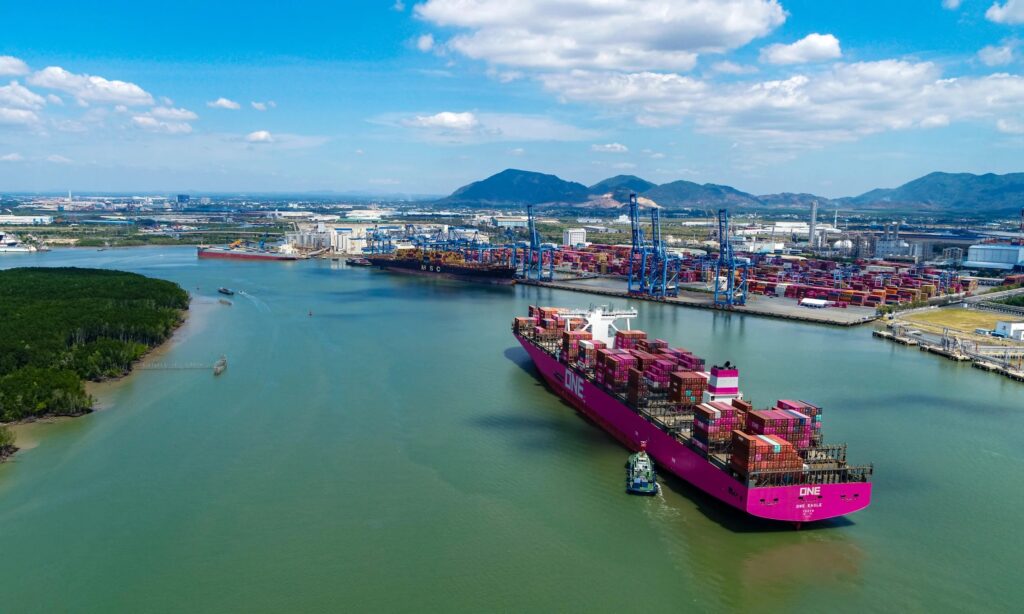
Located near the capital, Incheon is perfect for exporters based in the Seoul metropolitan area. It reduces inland trucking costs for factories in Gyeonggi-do and handles a significant volume of high-tech and industrial goods.
Incheon Port (ICH)
Gateway to Seoul & Gyeonggi-do
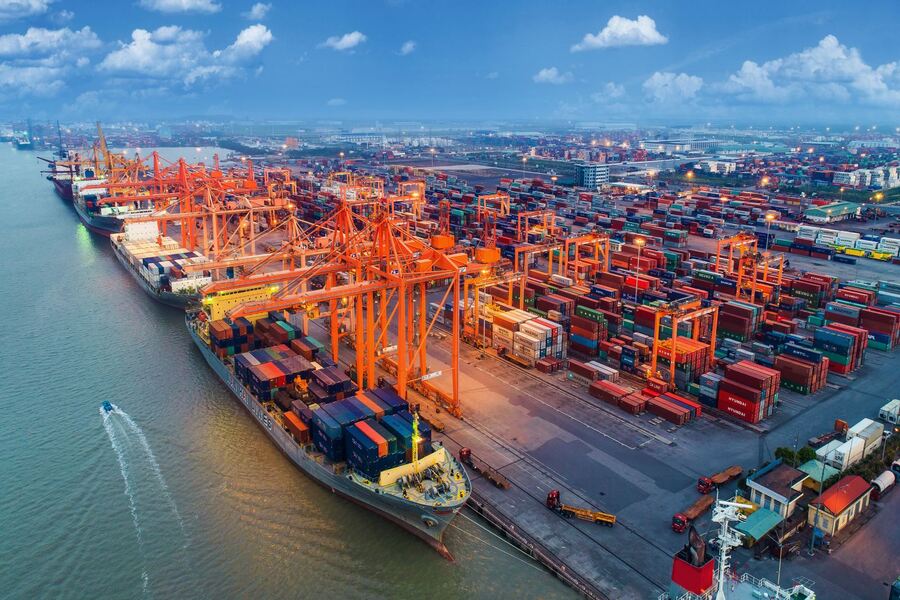
Located near the capital, Incheon is perfect for exporters based in the Seoul metropolitan area. It reduces inland trucking costs for factories in Gyeonggi-do and handles a significant volume of high-tech and industrial goods.
FCL & LCL Shipping from Korea to the USA
To support different cargo volumes and import strategies, Linkway Freight offers both Full Container Load (FCL) and Less Than Container Load (LCL) ocean freight solutions from Korea to the United States. Whether you are shipping full container quantities or smaller consolidated loads, we help you select the most efficient option based on cost, transit stability, and delivery requirements, while supporting DDU and DDP delivery models.
Full Container Load (FCL)
Efficient and Secure Shipping for High-Volume Cargo
What Is FCL
Full Container Load (FCL) refers to a shipping method where an entire container is reserved for a single shipper. The container remains sealed from origin to destination, offering a higher level of cargo security and operational control. For larger shipments, FCL is often the most efficient and cost-effective option.
When FCL Makes Sense
FCL is typically recommended when your cargo volume exceeds approximately 13–15 CBM. At this level, the cost per cubic meter drops significantly, making full-container shipping more economical than shared options.
Practical Use Case
For example, if you are exporting furniture from Vietnam and can utilize a 20-foot or 40-foot container, FCL allows your goods to move directly to US destinations without consolidation, reducing handling risks and transit uncertainty.
Cost Considerations
FCL pricing is mainly influenced by container size, routing, and distance. While the upfront cost of booking a full container may be higher, the lower cost per unit makes FCL the most economical choice for large-volume shipments. With proper planning, FCL can significantly optimize overall shipping costs and delivery efficiency.
Less Than Container Load (LCL)
Flexible Shipping for Smaller Volumes
What Is LCL
Less Than Container Load (LCL) is designed for shipments that do not require a full container. Multiple shippers share space in one container, allowing businesses to move smaller cargo volumes without committing to an entire container.
When LCL Is the Right Choice
LCL is ideal for shipments under approximately 13–15 CBM. It offers flexibility and lower upfront costs, making it a practical option for small or irregular shipments.
Practical Use Case
For instance, if you are shipping 10 CBM of goods from Ho Chi Minh City to Los Angeles, your cargo will be consolidated with other shipments. You only pay for the space your cargo occupies, while still benefiting from international ocean freight services.
Cost Considerations
LCL helps control costs by eliminating the need to pay for unused container space. However, due to consolidation, handling, and deconsolidation fees, the cost per CBM is generally higher than FCL. For growing shipment volumes, transitioning from LCL to FCL often leads to better cost efficiency.
Linkway Freight’s Professional Recommendation
Linkway Freight will match the most suitable shipping solution based on your cargo volume, shipping frequency, delivery model (DDU / DDP), and US destination.
Whether you choose LCL or FCL, we focus on cost control, delivery reliability, and compliant customs clearance to help optimize your overall logistics strategy from Vietnam to the United States.
Simplify Your Logistics from Korea to the US with Linkway Freight
Confused about consolidation or full container shipping options? Linkway Freight is here to streamline your global trade. Our freight forwarding experts meticulously evaluate crucial factors—such as cargo volume, budget constraints, and delivery timelines—to engineer your ideal shipping method. Don’t let logistics complexities slow you down. Instead, let us make your shipping process hassle-free and efficient. Ready to optimize your supply chain? Contact Linkway Freight for a free estimate today!
Specialized Cargo We Ship from Korea
Korea’s export profile is high-tech and high-value. We have specialized protocols for:
Sea Freight Transit Times
South Korea offers some of the fastest transit times across the Pacific. Direct vessels from Busan to Los Angeles can arrive in as little as 10-12 days.
Average Port-to-Port Transit Times:
| Origin (Korea) | Destination (USA) | Average Transit Time (Days) |
| Busan (PUS) | Los Angeles (LAX) | 10 – 14 (Express) |
| Busan (PUS) | Long Beach (LGB) | 11 – 15 |
| Busan (PUS) | New York (NYC) | 24 – 30 |
| Busan (PUS) | Savannah (SAV) | 23 – 28 |
| Incheon (ICH) | Los Angeles (LAX) | 14 – 18 |
| Incheon (ICH) | New York (NYC) | 28 – 35 |
Note: These are estimated times provided for planning purposes. Contact Linkway Freight for real-time schedules.
Why Use Linkway’s Door-to-Door Service?
The Ultimate Convenience: Door-to-Door Logistics Navigating international shipping can be complex, but Linkway Freight simplifies it with our Door-to-Door service. This method handles every step from the factory in Vietnam to your warehouse in the US.
Stress-Free Logistics
We handle pickup, export clearance, freight, import clearance, and final trucking. You focus on your business, not the logistics.
Specialized Care
Fragile or complex cargo is handled with precision, ensuring it reaches the destination in prime condition.
Timely Deliveries
Like a dedicated project manager, we ensure urgent shipments glide through potential bottlenecks to arrive on time.
Convenience
No more coordinating between multiple vendors (truckers, brokers, carriers). Linkway Freight is your single point of contact.
Customs Clearance Guide: Importing to the US
Mastering US Customs Compliance Customs clearance is an intricate dance of procedures involving duties, taxes, quotas, and HS codes. Understanding US Customs and Border Protection (CBP) regulations is crucial to avoid hidden fees or delays. Linkway Freight is at your service to simplify this complexity.
How to Calculate Duties & Taxes (Step-by-Step)
Step 1: Identify the Country of Origin
The origin directly affects the HS Code and tariff rates. Since Vietnam benefits from trade relationships with the US, knowing the origin helps you leverage potential benefits and avoid legal issues regarding misdeclaration.
Step 2: Find the HS Code
The Harmonized System (HS) code is the universal language for classifying goods. You can ask your supplier or use the Harmonized Tariff Schedule lookup tool. An accurate code is vital to prevent fines or refusal of entry.
Step 3: Calculate the Customs Value (CIF)
Duties are often based on the CIF Value (Cost, Insurance, and Freight).
Example: Goods cost $1,000 + Shipping $200 + Insurance $150 = $1,350 Customs Value
Step 4: Determine the Import Tariff
Visit the USITC (US International Trade Commission) website and search your HS Code.
Calculation: If the tariff rate is 1.3% and your CIF value is $11,000, the duty is $143.
Step 5: Consider Other Taxes
Importing from Vietnam involves navigating a layered tax structure. In addition to standard duties, specific commodities and recent policies trigger significant surcharges:
- Reciprocal Tariff (Additional Duty): A 20% additional tariff currently applies to goods imported from Vietnam. This is added on top of the standard duty.
- Section 232 Tariffs (Steel & Aluminum): Specific to metal imports. Regardless of origin, most steel and aluminum products face strict additional duties
Steel Products: 25% additional duty.
Aluminum Products: 10% additional duty. - Anti-Dumping (AD) & Countervailing Duties (CVD): Applicable if goods (especially steel, tires, or frozen foods) are sold below fair market value or subsidized.
Step 6: Total Duty Calculation Formula
Calculating your total landed cost now requires factoring in the new 20% reciprocal tariff. Here is the updated formula structure:
Basic Duty: Customs Value x Standard Duty Rate (e.g., 5%)
Reciprocal Tariff: Customs Value x 20%
Total Duty Payable: Basic Duty + Reciprocal Tariff
With Anti-Dumping (if applicable): Total Duty + Anti-Dumping Tax
Calculation Example: If your goods have a Customs Value of $10,000 and a basic duty rate of 5%:
- Basic Duty: $10,000 x 5% = $500
- Reciprocal Tariff: $10,000 x 20% = $2,000
- Total Customs Cost: $500 + $2,000 = $2,500
Required Customs Documents
Ensuring the accuracy of these essential documents is critical to preventing costly delays and guaranteeing a smooth customs clearance process.
Ensure these documents are accurate to avoid headaches:
Bill of Lading (B/L)
- What it is: The B/L is much more than a ticket; it is the “Title of Goods.” It serves three critical roles: a receipt for the cargo, a contract of carriage between you and the carrier, and a document of title (ownership).
- Key Feature: It dictates who has the right to claim the cargo at the destination.
- Pro Tip (Telex Release): To speed up the process, opt for a “Telex Release” (Surrender B/L). This digital surrender allows the consignee to pick up goods without waiting for the physical paper mail to arrive, eliminating the risk of lost documents and courier delays.
Packing List
- What it is: A precise itemization of the shipment. It must match the physical cargo 100%. Customs officers use this document to conduct inspections and verify that what is in the container matches what was declared.
- Key Details: It must clearly list the Net Weight, Gross Weight, Dimensions (CBM), Package Count (e.g., pallets, cartons), and specific Marks & Numbers on the packaging.
- Risk Warning: Even a small discrepancy (e.g., declaring 100 cartons but shipping 101) can trigger a red flag, leading to intensive customs exams, storage fees, and severe delays.
Commercial Invoice
- What it is: This is the primary document used by US Customs to assess import duties and taxes. It is not just a request for payment; it is a legal declaration of the goods’ value.
- Key Components: It must include the Buyer and Seller’s full information, accurate HS Codes (Harmonized System codes), unit price, total value, currency, and the Incoterms (e.g., FOB, CIF, DDP).
- Why it matters: The HS Code determines the tariff rate. An incorrect code or undervalued invoice can lead to retroactive penalties, fines, and audits by Customs and Border Protection (CBP).
Certificate of Origin (C/O)
- What it is: An official document certifying the specific country where the goods were grown, produced, or manufactured. It acts as the “Passport” for your products.
- Compliance: It proves your goods are not from a sanctioned country or one subject to higher anti-dumping duties.It is the key to claiming Preferential Duty Rates. If your goods qualify under specific Free Trade Agreements, a valid C/O can reduce your tariff rate to zero.
- Note: For Vietnam-US trade, this is crucial to distinguish your products from those of other nations that may face higher Section 301 tariffs.
South Korea – US Trade and Economic Relationship
The trade alliance between South Korea and the US is a cornerstone of the global economy, fortified by the KORUS FTA enacted in 2012. South Korea is the US’s 6th largest trading partner.
High-Tech Interdependence: The relationship is defined by deep supply chain integration. Korea is a dominant supplier of memory chips (Semiconductors), electric vehicle (EV) batteries, and automotive components to the US. With major investments from companies like Samsung, Hyundai, and SK Innovation into US facilities, the logistics demand for machinery and raw materials is skyrocketing.
Consumer Goods Boom: Beyond industrial goods, the “Korean Wave” (Hallyu) has driven massive demand for K-Beauty products and processed foods in the American market. Understanding the nuances of FDA compliance for these consumer goods, alongside the industrial handling of EV batteries, is essential for a successful logistics strategy.
Your Next Step with Linkway Freight
Shipping goods between Korea and the US can be daunting: complex customs regulations, changing tariffs, and endless documentation. Why get caught in the delays?